Running with the Right Mindset to Boost Creativity

Running with the Right Mindset to Boost Creativity

IM Creativity0_Feature image
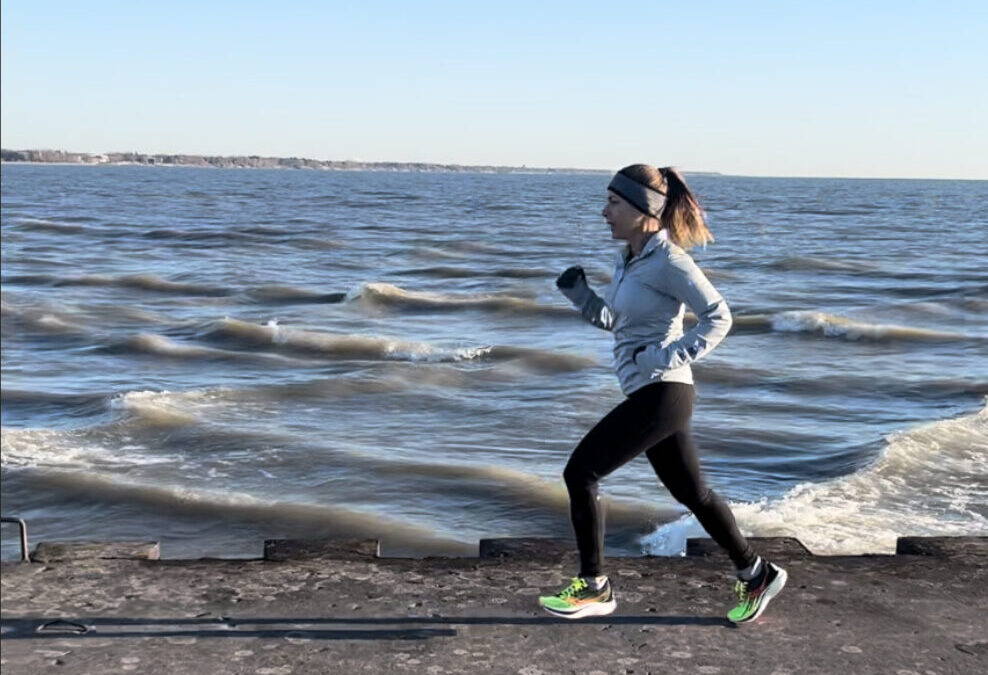
Being in the right mindset before a run is crucial for harnessing its full potential to impact both creativity and mood. The phrase “one run can change your mood, your day, and even your life” holds an undeniable magic that resonates with many of us, myself included. As a professional creative, I’ve consistently marveled at how running can ignite my creativity in remarkable ways. I feel fortunate to merge my passion for running with my creative career. Specifically, when I approach my runs with intentional creativity, I find that time flies and inspiration strikes effortlessly.

This week, after feeling overwhelmed with a project, I decided to infuse my run with purpose. The result? A burst of creativity that yielded an entire marketing concept for the project. It’s moments like these that remind me of the profound connection between physical activity and creativity. Definitely, that run not only uplifted my mood and day but also reinforced the notion that a positive mindset is crucial for getting positive impacts from exercise. While the best ideas aren’t always guaranteed, approaching a run with intentionality and mindfulness can undoubtedly shape one’s life.

Running offers numerous physical and mental benefits that amplify creativity. Whether it’s by enhancing blood flow to the brain, reducing stress, or fostering a positive mental state, running serves as a potent tool for unlocking creativity and problem-solving.


Running has been shown to have several potential benefits for sparking creativity:

Enhanced Blood Flow to the Brain: Running increases blood flow to the brain, delivering more oxygen and nutrients to brain cells. This can enhance cognitive function and creativity.

Stress Reduction: Running can reduce stress levels. Lower stress levels are often associated with increased creativity as it allows the mind to relax and think more freely.

Mind-Wandering: While running, your mind often wanders, allowing it to make connections between ideas and generate new insights. This state of relaxed attention can be conducive to creative thinking.

Release of Endorphins: Running triggers the release of endorphins, neurotransmitters that can improve mood and reduce pain perception. This can create a positive mental state that is conducive to creativity.

Brain Plasticity: Regular aerobic exercise, like running, has been shown to promote neuroplasticity, the brain’s ability to form new connections and adapt to new challenges. This can enhance cognitive function, including creativity.

Solving Problems: Running provides a break from focused thinking, allowing your mind to subconsciously work on problems or ideas in the background. Many people find that their best ideas come to them during or after a run.

Improved Sleep: Regular exercise, including running, can improve the quality of your sleep. Better sleep is associated with improved cognitive function, including creativity.

Boosted Confidence: Achieving running goals, such as completing a certain distance or improving your pace, can boost self-confidence. This confidence can carry over into other areas of your life, including creative endeavors.

Ultimately, being in the right mindset before a run involves a combination of mental preparation, intentionality, and receptivity. By approaching the run with mindfulness, positivity, and a sense of purpose, one can maximize its potential to positively impact both creativity and mood.

With love and care, Francis.

Being Present & Running with Intentional Miles

Being Present & Running with Intentional Miles

[/et_pb_column]
https://francisflex.com/wp-content/uploads/2024/0IM-Being-Present2_Feature-image.jpg
Embracing the present moment and running with intentional miles was an amazing experience. I was so excited about the concept of intentional miles that I applied it to my last race a few days ago. Every stride was guided by a single intention: Being Present. Despite my GPS watch showing inaccurate readings throughout the race, this focus on the present moment made all the difference. Instead of being distracted by uncertain data, I concentrated on the here and now—each step, each breath, every movement. Controlling my pace was challenging without accurate feedback, but this focus on the present kept me grounded and aligned with my goal.

The connection between intention and each mile brings a deeper meaning to running. It can fuel your mind, pushing your body to achieve its best performance. For this race, I decided to anchor my thoughts in the now. When you are truly present, you don’t analyze; you act. Anytime I felt doubt or fatigue creeping in, I asked myself, “How do you feel RIGHT NOW, Francis?” I wasn’t overthinking; I was moving—running—and my answers came easily and honestly: “I’m getting tired, but I’m fine.” My focus remained on putting one foot in front of the other, not on whether I could maintain a certain pace.

By the end of the race, I had exceeded my own expectations, feeling a sense of fulfillment despite the fatigue. If you’re a runner, you know what I mean—it’s that tired yet amazing feeling. This experience reinforced the power of being in the moment, a lesson I’m taking forward in my running and life journey.
 

Here are some ways to practice and strengthen the ability to stay present and fully engage with each moment:

Practice Mindfulness: Incorporate mindfulness exercises into your daily routine. This can include meditation, deep breathing, or simply taking a few minutes to focus on your surroundings without judgment.

Limit Distractions: Reduce the number of distractions around you. This could mean turning off notifications on your phone, creating a dedicated workspace, or setting aside specific times for uninterrupted activities.

Set Intentions: Begin each day or activity with a clear intention. For instance, decide to focus solely on the present moment during your run or while working on a task.

Engage Your Senses: Pay attention to what you can see, hear, smell, touch, and taste. Engaging your senses helps ground you in the present moment and enhances your awareness.

Focus on Breathing: When you feel your mind wandering, bring your attention back to your breath. Concentrate on the rhythm of your inhales and exhales to anchor yourself in the present.

Accept Imperfections: Recognize that perfection is not the goal. Embrace imperfections and setbacks as part of the journey, allowing you to stay focused on the present rather than worrying about the past or future.

Take Breaks: Regular breaks throughout the day can help you reset and refocus. Use these breaks to stretch, walk, or simply breathe deeply.

Practice Gratitude: Spend a few minutes each day reflecting on what you’re grateful for. This can shift your focus to the present and help you appreciate the moment.

Single-tasking: Instead of multitasking, try to focus on one task at a time. This helps you fully engage with the present activity and enhances the quality of your work.

Reflect on Your Experiences: At the end of the day, take some time to reflect on your experiences and how you felt during different moments. This can increase your awareness and help you identify areas where you can be more present.

Stay Active: Physical activity, especially activities like running or yoga, can help you stay present by focusing on your body and movement.

Create Rituals: Establish daily rituals that encourage mindfulness, such as a morning routine, a cup of tea in the afternoon, or a bedtime ritual.

With love and care, Francis.

Overcoming Self-Doubt

Overcoming Self-Doubt

IM Believe_Feature image
“I’ve got this! I can do it!” How many times do we say these words to ourselves during a single run? Most times, we truly believe in our capability to do well, but often, we’re just repeating the words. Sure, we’re capable of achieving whatever we set our minds to, as long as we take action. But here’s the thing: we often struggle with self-doubt more than we care to admit. It’s a constant battle of “me against me,” and it takes more than just positive affirmations to win. We need to have faith in ourselves – trust and confidence. We must build up our self-belief and be prepared to face doubts head-on whenever they arise.

This is exactly what I’m experiencing this week. In addition to the physical work and the mental focus required for my upcoming race this weekend, I have to deal with a nagging inner voice that distracts me. But not this time! I’ll do my best with confidence because I know I have a solid foundation in my training.

Remember, challenging workouts or daunting decisions often trigger the instinct to postpone because they seem beyond our reach. It’s not about how hard things can be, but rather our lack of belief in our ability to see them through. That’s just self-doubt talking. Stop listening to that critical voice inside your head. The “me against me” battle starts when our old self sabotages our progress. Dare to take on challenges, pursue opportunities, and believe!

“There is not enough room in your mind for both doubt and faith. You must decide which one gets to live there.” ~ Unknown

How to Build Self-Belief and Overcome Self-Doubt

Adopting a mindset of self-belief and overcoming self-doubt involves several key steps:

Set Clear Goals: Define what you want to achieve.

Positive Affirmations: Reinforce your goals with encouraging words.

Break Down Tasks: Make large tasks more manageable by dividing them into smaller steps.

Visualize Success: Picture yourself achieving your goals to build confidence.

Challenge Negative Thoughts: Confront and reframe self-doubt.

Celebrate Progress: Acknowledge and celebrate small victories.

Learn from Failures: View setbacks as opportunities for growth.

Surround Yourself with Positivity: Engage with positive, supportive people.

Practice Self-Compassion: Be kind to yourself and recognize that everyone struggles at times.

Stay Consistent: Make these practices a regular part of your routine.

By incorporating these practices into your daily life, you’ll gradually build a stronger, more resilient mindset to tackle challenges and overcome self-doubt.

With love and care, Francis.

Embracing Challenges & Finding Purpose in the Journey

Embracing Challenges & Finding Purpose in the Journey

IM Purpose_Feature image
Facing challenges can transform our perspective on life, but addressing them head-on can provide clarity and direction to find purpose in the journey. Lately, I’ve found myself thinking about the same question repeatedly: “WHY is this happening?” I realized that the answers varied depending on the intent behind the question. Am I seeking sympathy, or am I genuinely seeking insight and personal growth? By confronting this internal conversation, I acknowledged that I was the only one responsible for my circumstances and feelings. While I recognized my ability to change both, I couldn’t escape the reality that I am also the one who determines how to respond to them.

My ‘aha moment’ came during a run when I understood that as challenging as it may be, growth occurs when we push ourselves beyond our comfort zone to reach a bigger dream. It’s like increasing the miles to get ready for an upcoming race or chasing a PR—I can easily relate to this.

Today, my intention for this run was “Purpose”—to see the challenge as a process for growing. So, I know that my Purpose is my WHY. It’s the essence of who I am, serving as my compass to become better, and it’s a constant search for self-improvement. Now, I’m excited, knowing that I can become the best version of myself even when it’s challenging and requires getting out of my comfort zone. This is my race!

Why do I share this reflection? My honest intention is to offer a perspective on how understanding our challenges can infuse our journey with purpose.

Do you have any profound intention behind your runs?

Applying the concept of finding purpose through confronting challenges can be a transformative experience.

Here’s how you can embrace challenges and find purpose in the journey:

Self-Reflection: Take time to reflect on your experiences and emotions. Ask yourself why you feel a certain way and what you can learn from it. Journaling can be a helpful tool for this process.

Embrace Accountability: Accept responsibility for your actions and feelings. Understand that you have the power to change your circumstances and your reactions to them.

Set Meaningful Goals: Identify what is important to you and set goals that align with your values and purpose. Break these goals into smaller, actionable steps.

Adopt a Growth Mindset: View challenges as opportunities to learn and grow rather than obstacles. Embrace the discomfort that comes with pushing your limits.

Seek Understanding, Not Pity: When faced with difficulties, focus on understanding the underlying reasons and lessons rather than seeking sympathy. This shift in perspective can empower you to take constructive action.

Practice Resilience: Develop resilience by facing challenges head-on. This can involve building coping strategies, seeking support when needed, and maintaining a positive outlook.

Learn from Setbacks: Analyze setbacks to understand what went wrong and how you can improve. Use these lessons to refine your approach and move forward with greater clarity and determination.

Stay Committed: Recognize that finding and pursuing your purpose is an ongoing journey. Stay committed to continuous self-improvement and remain open to evolving your understanding of your purpose.

We can transform challenges into meaningful experiences that guide us toward a more purposeful and fulfilling life.

With care and love, Francis.

A Runner’s Journey to Mindfulness & Emotional Release

A Runner’s Journey to Mindfulness & Emotional Release

IM Perception_Feature image

How setting intentions for every mile transforms my solo runs: A Runner’s Journey to Mindfulness & Emotional Release.

Before starting a solo run I ask myself “What intention will I give to this run?” Answer: Whatever is in my mind usually wins.
Either, I want to forget about my problems or think about it during the run. Consciously or not… that’s an intention. So, now I have made a conscious decision to give an intention to my runs and some time to each mile – when there’s too much going on, one intention is not enough.

I’ve found this very helpful during my solo runs; usually, in the first part of the run I think and observe my thoughts, and in the second part I listen and observe my emotions. Do you know that ‘emotions are the body’s reaction to your thoughts’?
I don’t always find the solution to my problems after running but I always feel much better and with a more positive mindset.

I didn’t run by myself today but I knew this run needed an intention. ‘Perception’ was the intention for some of the miles today. I wanted to see things from different angles. I wasn’t looking for answers but understanding, and without noticing I wasn’t even thinking anymore. Now, I understand that I don’t have to share my problems (I don’t like to advertise them) but I can share how I’m using my runs not just to burn calories but to release the ‘heavy energy’ that wants to keep me down. I don’t know but there’s something magical about the flow of energy when running, and I want to use that energy in the best way possible.

This week one of my running partners mentioned that she dedicated a mile to pray for a specific person during her solo runs. What a wonderful way to send good intentions.

I’d love to hear how you give intentions to your runs or how you use your runs to propel yourself.

With love and care, Francis